
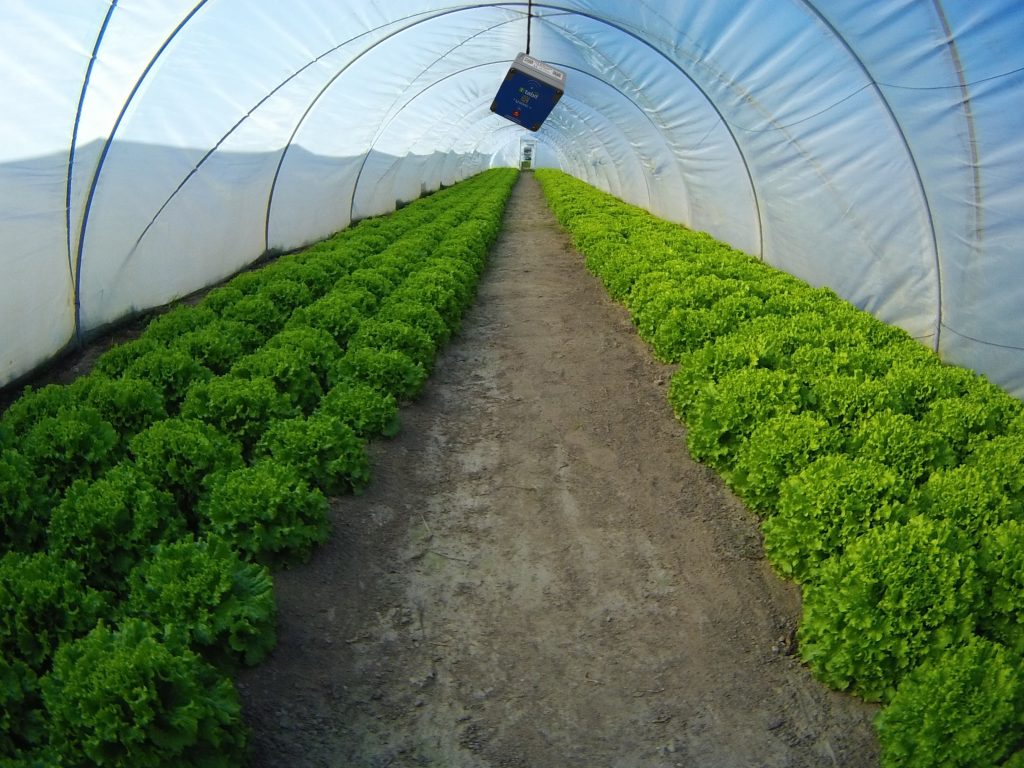
Project Overview
This project aims to overcome the challenges of traditional greenhouse farming. Difficulties in controlling internal factors such as air circulation, temperature, and humidity often lead to inefficiencies that negatively impact agricultural productivity. By utilizing advanced greenhouse sensors and automation technologies, the project seeks to provide farmers with the opportunity to practice more efficient, safe, and sustainable agriculture.
Project Problem Area
Growing crops using traditional greenhouse methods can be challenging and risky. Many farmers hesitate to establish or operate greenhouses due to the difficulty of managing air circulation, temperature, and humidity levels. This leads to inefficient farming practices and potential production losses.
Social, Economic, and Environmental Impacts
Social Impacts:
Greenhouse sensors help reduce farmers’ workload while enabling them to manage production more efficiently. Increased agricultural productivity contributes to food security and improves community nutrition levels.Economic Impacts:
By maintaining optimal climate conditions and reducing production losses, greenhouse sensors increase agricultural efficiency, raise farmers’ income, and enhance the agricultural sector’s contribution to the economy.Environmental Impacts:
Accurate climate control allows for more efficient use of natural resources such as water and energy, promoting environmentally friendly farming practices and reducing negative environmental impacts.
Our Solution Strategy as the Agricultural Solutions Center
Greenhouse sensors and automation technologies:
Using advanced sensors and automated systems, parameters such as air circulation, temperature, and humidity will be continuously monitored and adjusted to maintain ideal growing conditions.Data analysis and recommendations:
Data collected from sensors will be analyzed to provide farmers with tailored agricultural strategies and insights, helping optimize resource use and boost productivity.
Uniqueness of the Solution Strategy
This project stands out by ensuring continuous optimization of internal greenhouse conditions through advanced sensors and automation technologies. It allows farmers to manage production processes more efficiently and effectively compared to traditional methods.
Project Uniqueness and Objectives
The main difference of the project is the use of advanced greenhouse sensors and automation systems, which enable more efficient and controlled agricultural production compared to conventional greenhouse practices.
Key objectives include simplifying farmers’ production processes, increasing agricultural productivity, minimizing yield losses, and promoting environmentally sustainable farming practices.
Project Activities and Promotion
Under this project, developed greenhouse sensors and automation systems will be introduced to farmers through demonstrations and training sessions. Guidance will be provided on how to use the sensors and interpret collected data.
The project will be promoted through agricultural conferences, exhibitions, and social media, and collaboration with agricultural stakeholders will be established.
Sustainability Goals
For long-term sustainability, regular maintenance of sensors and consistent data collection are essential.
Continuous training programs and updates on technological advancements will ensure that farmers have ongoing access to up-to-date knowledge and technical support.
SDG (Sustainable Development Goal) Impacts
SDG 2: Zero Hunger
Contributing to food security through efficient and controllable agricultural production.SDG 7: Affordable and Clean Energy
Enhancing energy efficiency and supporting environmentally friendly greenhouse operations.
Proposed Business Model
Funding for the project may come from agricultural technology companies, cooperatives, government grants, or farmer contributions.
Technology companies or agricultural cooperatives could oversee the production and distribution of greenhouse sensors, while also offering technical support and maintenance services to farmers as an additional source of revenue.